
A Closer Look at the Remarkable Evolution of Dental Crowns
February 4, 2026
Believe it or not, dental crowns have been restoring smiles for literal centuries! While today’s crowns are carefully engineered for durability, comfort, and a natural appearance, their origins are surprisingly ancient. Let’s take a brief journey through the history of dental crowns and how far the technology used in making them has come.
Dental Crowns of the Past: A Solid Start
The earliest evidence of dental restorations, such as crowns, dates back thousands of years, when cultures such as the Ancient Sumerians and Egyptians used a variety of different materials to “repair” and “replace” teeth. Things like wooden pegs, ivory, and even bones from animals were used, with varying degrees of success. This continued through 700BC, when the Etruscans in Italy began skillfully using metals like gold. While primitive by today’s standards, these restorations were remarkably innovative for their time, and to this date, things like gold are still used for certain aspects of dental care.
Fast forward to the 1700s and 1800s, and dentistry began evolving into a more scientific field. Porcelain emerged as a popular material since it mimicked the natural color of teeth, and this marked an important turning point: dental crowns could now serve both function and appearance. In the mid-1900s, these became even more apparent when porcelain-fused-to-metal crowns entered the mix, combining practicality with aesthetics.
Dental Crowns Today: Precise & Beautiful
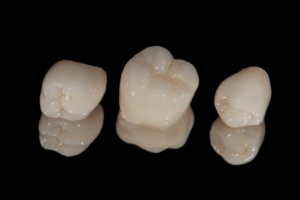
Modern dental crowns are more precise, durable, and natural-looking than ever before. Today’s materials still include porcelain, but often, ceramics or zirconia are used as well since they offer exceptional strength and biocompatibility. They can also even reflect light, just like your actual enamel. While metal can still be used in some situations, it’s far less noticeable and doesn’t come with many of the same old drawbacks as before.
Plus, digital scanning technology has largely replaced the need for messy traditional impressions. Computer-aided design can also allow for detailed customization, ensuring crowns fit seamlessly and comfortably within your smile and bite. Additionally, modern bonding techniques and dental cement have improved the longevity and stability of crowns, helping them last for many years with proper care.
Dental crowns have truly undergone an impressive transformation over the years, and our ancestors would probably be quite impressed to see how adept we’ve become at replacing pearly whites and enhancing our quality of life!
About the Practice
Under the talented leadership of Dr. Philip A. Lisk, our team has proudly served patients and families in North Raleigh and the nearby areas for several years. We offer a wide range of preventive, cosmetic, and restorative treatment options, including dental crowns made from beautiful, durable, biocompatible materials. If you have any questions about the blog or you’d like to schedule a visit with Dr. Lisk, please feel free to contact us online or by phone for more information. Telephone: (919) 870-6892.
No Comments
No comments yet.
RSS feed for comments on this post.
Sorry, the comment form is closed at this time.